

Essential Subfloor Preparation Checklist for Installing Laminate over Concrete
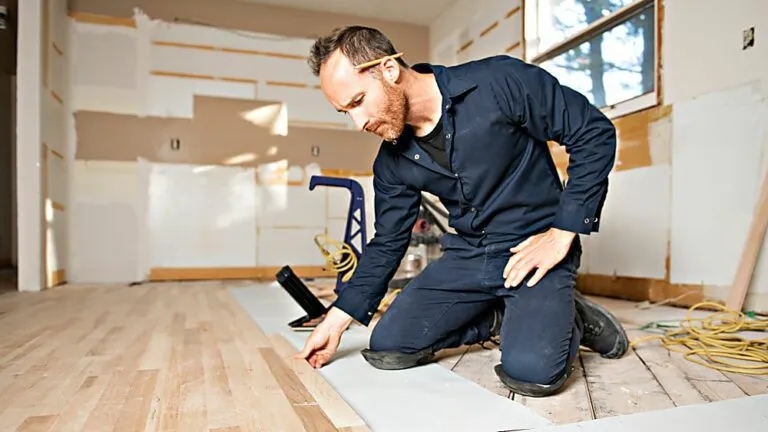
Essential Subfloor Preparation Checklist for Installing Laminate over Concrete
Step 1: Clean and Clear the Concrete Surface
- Remove Existing Coverings: Stripping away old carpet, tile, or floating floors entirely.
- Scrape Away Adhesives: Using a floor scraper to clean off dried paint, old carpet glue, or mortar patches.
- Vacuum Thoroughly: Sweeping up fine dust and debris, followed by a vacuum with a HEPA filter to leave the surface clean.
Step 2: Test for Subfloor Moisture
- Perform a Plastic Sheet Test: Taping a 2-foot by 2-foot piece of clear polyethylene plastic to the concrete floor using duct tape around all edges. Leaving it sealed for 24 to 48 hours. Condensation under the plastic indicates moisture escaping from the concrete.
- Use a Calcium Chloride or Digital Meter Test: Utilizing an electronic moisture meter for accurate numerical readings to verify the concrete meets the board manufacturer’s relative humidity (RH) thresholds.
Step 3: Inspect Flatness and Levelness
- Use a 10-Foot Straightedge: Laying a long straightedge across the subfloor to identify high spots and low dips.
- Check the Standard Tolerances: Ensuring the floor does not deviate by more than 3/16 of an inch over a 10-foot radius (or 1/8 of an inch over a 6-foot radius).
- Grind High Spots: Using a concrete grinder to smooth down high ridges or bumps.
- Fill Low Dips: Applying a high-grade Portland cement-based self-levelling underlayment to fill depressions, feathering out the edges so the transition is seamless.
Step 4: Repair Cracks and Structural Defects
- Inspect Hairline and Major Cracks: Cleaning out loose concrete chips or dust from all cracks.
- Seal Hairline Fractures: Filling fine cracks with high-grade concrete joint sealant or epoxy filler.
- Repair Deep Trenches: Applying a dedicated concrete patching compound to larger pits and letting it cure completely according to manufacturer instructions.
Step 5: Install Moisture Barriers and Underlayment
- Lay a Vapour Barrier: Rolling out a 6-mil polyethylene vapour barrier across the entire concrete floor. Overlapping seams by 6 to 8 inches and sealing them tightly with moisture-resistant tape.
- Select the Right Underlayment: Choosing a quality underlayment designed for concrete applications. High-density foam, rubber, or cork underlayment provides thermal insulation against cold ground temperatures and absorbs sound.
- Combine Barriers When Applicable: Using an underlayment with an integrated vapour barrier to streamline installation, while making sure all seams are tightly taped.
Frequently Asked Questions
Can laminate flooring be installed directly over bare concrete without underlayment?
No, laminate planks should never be laid directly on concrete. Concrete releases moisture, feels cold, and lacks cushioning. A minimum 6-mil vapour barrier and appropriate underlayment are essential to protect against moisture damage and sound transmission.
How long should fresh concrete cure before installing laminate?
Freshly poured concrete slabs generally require a minimum cure time of 60 to 90 days before installing any laminate product. Always perform a verified moisture test to ensure the slab has dried thoroughly before proceeding.
What happens if the concrete subfloor is not level?
Installing laminate over an uneven concrete surface causes hollow spots beneath the planks. Over time, foot traffic forces the planks down into these gaps, putting severe strain on the tongue-and-groove locking mechanisms, which can lead to joint failure, squeaking, or board separation.
How is a basement subfloor prepared for laminate differently than an upper floor?
Basement concrete slabs are in direct contact with the earth, making them much more susceptible to rising dampness and cold conditions. Extra attention must be paid to high-performance vapour barriers and insulating underlayment to maintain a comfortable indoor temperature.
Planning your next interior enhancement? As a trusted full service carpet and flooring company with decades of experience, Markville Carpet & Flooring offers expert supply and professional installation across Toronto & Markham, ON. Whether you need comprehensive residential flooring for your home or specialized commercial flooring solutions for a business space, our team is here to assist.
Visit our state-of-the-art showrooms in Markham, ON or Toronto, ON to explore quality options, or contact us today to book a consultation with our experienced flooring experts.