

Designing Safe and Stylish Stairs That Match Your Home
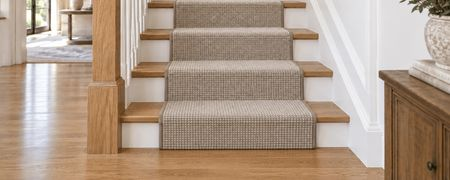
Stairs connect the living spaces in your home, serving as a visual bridge between upper and lower levels. Because your staircase experiences heavy foot traffic every day, the material you select needs to handle continuous wear while providing stable footing for your family. The right choice creates a smooth transition between rooms while highlighting the architectural lines of your entryway or hall. Selecting stair flooring involves finding a balance between surface traction, structural durability, and visual harmony.
Navigating the various materials available can feel overwhelming when you consider how different textures perform under daily use. Hardwood offers clean lines and natural longevity, carpet brings quiet comfort and exceptional grip, while luxury vinyl provides remarkable resilience against moisture and wear. Each option changes the sound, feel, and appearance of your home in distinct ways. By focusing on how your household moves through space, you can choose a material that feels secure, lasts for years, and unifies your overall interior layout.
Prioritizing Traction and Underfoot Safety
Safety remains the foundational consideration when updating a staircase, as elevated surfaces require dependable grip with every step. Hard, glossy finishes can feel slick under socks, which increases the likelihood of slips for children, pets, or older family members. Choosing materials with natural texture or adding tailored soft coverings helps secure every footfall without compromising on design.
Carpeted steps offer built-in slip resistance along with a soft landing surface. Synthetic fibers like nylon or textured wool loops grip footwear naturally, creating a confident path up and down. If you prefer the crisp look of solid wood or luxury vinyl, installing a textured runner down the center leaves the outer edges exposed while providing a secure center tread. Matte finishes on hard surfaces also scatter light better and offer slightly more friction than high-gloss coatings, making them a practical choice for active households.
Beyond surface texture, stair edges demand special attention to prevent stumbles. Tread noses, which extend over the top of each riser, take the direct impact of foot placement. Ensuring these edges are rounded or fitted with low-profile safety nosing provides a clear visual indicator for where each step ends. Bright, even lighting combined with distinct textural cues gives everyone in your home a clear, confident path between floors.
Ensuring Durability Under Concentrated Traffic
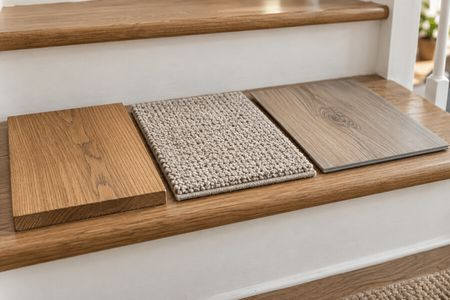
Staircases experience concentrated weight and friction on the exact same spot with every ascent and descent. Unlike open floor plans where foot traffic spreads out, stair treads take direct, repeated impact along the front edge. Selecting materials engineered to resist indentation, scuffing, and edge wear prevents premature aging in these high-use areas.
Hardwood species like oak, maple, and hickory stand up exceptionally well to the vertical forces exerted on steps. Their dense grain structures absorb impacts without denting easily, and their surfaces can be sanded and refinished after decades of use. Luxury vinyl plank has also emerged as a powerful alternative, featuring tough wear layers that protect against claw marks, shoe scuffs, and moisture tracked in from outdoors.
For carpeted installations, high-density options with short, tightly twisted piles withstand compression far better than deep, plush styles. Low-profile cut piles and low-loop constructions maintain their shape under heavy pressure, preventing the flat, matted appearance that often plagues lower-density carpeting over time. Pair your chosen carpet with a dense, low-thickness pad designed specifically for steps to absorb impact energy without creating a mushy, unstable feel underfoot.
Managing Acoustics and Sound Reduction
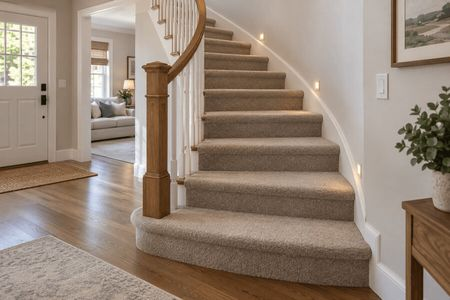
The movement of feet across an uninsulated staircase can echo throughout an entire house, creating distracting noise in neighboring bedrooms and living areas. The physical structure of stairs often acts like a soundboard, amplifying impact noises through the framing of your walls. Selecting materials that absorb vibration helps maintain a calm, quiet atmosphere across every floor.
Carpet acts as a powerful acoustic buffer, trapping sound waves within its fibers and preventing footsteps from echoing down hallways. The dense structure of soft flooring softens the sharp impact of hard soles, pet nails, and dropped items. If you prefer hard surfaces, integrating a high-performance acoustic underlayment beneath luxury vinyl or engineered wood significantly reduces hollow, clicking noises and dampens sound transmission through the subfloor structure.
If you love the classic appearance of fully exposed wood or laminate, running a thick runner down the flight balances crisp aesthetics with effective noise control. The soft central strip absorbs the sharpest impacts while leaving the natural grain visible along the borders. This combination allows you to enjoy the timeless look of hard materials without sacrificing the peaceful environment of your living space.
Creating Visual Continuity Between Levels
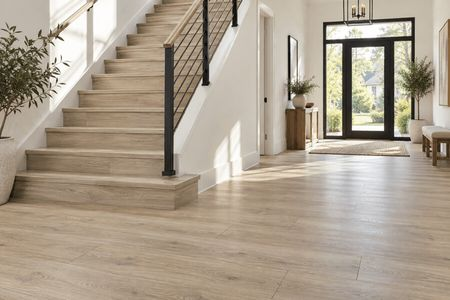
A staircase should feel like a intentional bridge rather than a harsh break between different zones in your home. Matching or coordinating your stair treads with the main flooring on your lower level establishes an inviting visual flow that makes your home feel expansive and well-planned. Continuing the same wood tone, color palette, or plank direction creates a smooth progression as you move upward.
When transitioning from a hard surface on the main level to carpet on the upper floor, the staircase serves as the natural middle ground. Using a runner that incorporates tones from both levels ties the two distinct styles together. Alternatively, wrapping the treads in the lower level’s wood tone and pairing them with painted risers that match your baseboards creates a clean, architectural look that coordinates with any upper-level flooring.
Color choices also influence how spacious and bright your staircase feels. Lighter wood tones and neutral carpets bounce light into enclosed stairwells, making narrow passages feel open and airy. Darker finishes ground the space and highlight structural woodwork, offering a sophisticated contrast against light walls. By considering how light hits your steps throughout the day, you can select materials that enhance the natural dimensions of your home.
Selecting the Ideal Material for Your Staircase
Matching the right flooring material to your lifestyle ensures long-term satisfaction with your investment. Families with small children or older adults often prioritize the cushioning and grip of carpet, while pet owners frequently lean toward the quick-cleaning convenience of luxury vinyl or hardwood. Evaluating how your household utilizes the space guides you toward a choice that feels both practical and satisfying every day.
laminate offers timeless appeal, superior structural integrity, and long-term value, making it a favorite for traditional and modern homes alike. luxury vinylplank delivers similar visuals with enhanced water resistance and easier spot maintenance, ideal for entryways that open directly onto a staircase. Carpet provides warmth, comfort, and noise dampening, making early mornings and late nights far quieter for everyone in the house.
Taking time to review physical samples on your actual steps helps you evaluate how different textures and colors interact with your home’s lighting and wall colors. Placing samples directly on a step allows you to view them from above and below, giving you a accurate perspective on how the final installation will look. With the right guidance and materials, your staircase becomes a durable, quiet, and stunning feature that connects your home.
At Markville Carpet & Flooring, we’ll help you explore your options and find the right flooring for your home in Toronto & Markham, ON.